
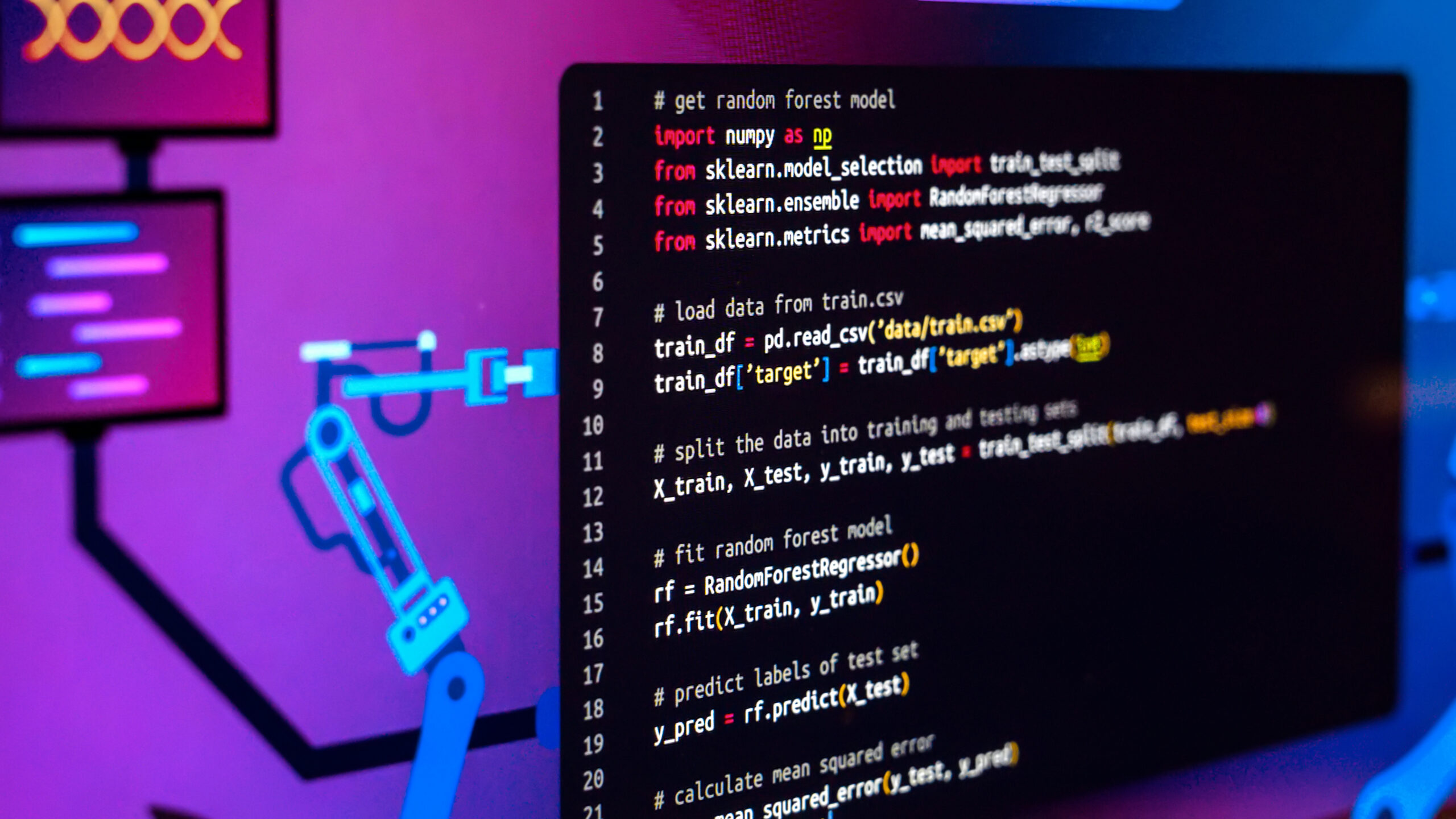
Vibe coding is a modern software development approach where developers use artificial intelligence (AI) to generate code using natural language prompts instead of writing code manually. The term was introduced by AI researcher Andrej Karpathy in early 2025 to describe a conversational and AI-assisted coding workflow. In vibe coding, developers focus on describing what they want to build, while AI tools generate, modify, and refine the code automatically. This approach shifts the role of developers from writing syntax to guiding, reviewing, and refining AI-generated solutions. Vibe coding is transforming software development by making app creation faster, more accessible, and more creative.
Vibe coding is a software development method where AI tools generate applications based on human instructions written in plain language. Instead of coding line-by-line, users communicate with AI assistants and guide them to build features, interfaces, or complete applications.
For example, instead of writing code manually for a login system, a developer can simply prompt the AI: “Create a secure login form with email and password validation.” The AI will generate the required code automatically.
This approach allows developers to focus on ideas, functionality, and problem-solving rather than syntax and technical implementation.
The term “vibe coding” was coined by Andrej Karpathy in February 2025. He described it as a workflow where developers interact with AI conversationally and allow the AI to generate and modify code. This concept emerged alongside advances in large language models (LLMs) such as ChatGPT, Claude, and Codex, which are capable of generating functional software from simple instructions.
Vibe coding represents a major shift from traditional programming to AI-assisted development.
Vibe coding typically follows an iterative and conversational workflow.
The developer provides a natural language prompt describing the desired functionality.
Example:
“Create a web app that allows users to track daily expenses.”
The AI analyzes the prompt and creates the required code, file structure, and components.
The generated code is executed to check whether it works correctly.
If changes are needed, the developer provides additional instructions such as:
Once the application works properly, it can be deployed to production.
This process allows rapid development through continuous feedback and improvement.
AI tools like Cursor, Replit, Windsurf, and Claude Code can generate, edit, and run code automatically.
Developers communicate with AI using plain English instead of programming syntax.
Developers can quickly test, refine, and improve applications through conversational feedback.
Developers focus on the outcome and logic rather than writing technical code.
AI acts like a coding assistant or junior developer that helps generate and refine code.
Vibe coding typically follows an iterative and conversational workflow.
The most popular vibe coding tools include:
These tools provide:
| Feature | Traditional Programming | Vibe Coding |
|---|---|---|
| Code creation | Manual coding | AI-generated |
| Developer role | Writes code directly | Guides AI |
| Speed | Slower | Faster |
| Skill requirement | High | Lower |
| Workflow | Technical | Conversational |
| Focus | Syntax and logic | Functionality and ideas |
Traditional programming focuses on manual implementation, while vibe coding focuses on AI-assisted creation.
Startups use vibe coding to quickly build and test Minimum Viable Products (MVPs).
Non-developers build tools like:
Developers create websites, dashboards, and tools using AI prompts.
Developers test ideas quickly before building full production systems.
One of the biggest advantages of vibe coding is the speed at which applications can be built. Instead of manually writing hundreds or thousands of lines of code, developers can simply describe the functionality they need, and the AI generates the code instantly. Tasks that previously took hours or days can now be completed in minutes. This significantly reduces development time, especially for repetitive tasks such as creating forms, dashboards, APIs, or UI components. Faster development allows developers and businesses to launch products quicker, respond to market needs faster, and reduce overall development costs.
Vibe coding makes software development accessible to people who do not have formal programming knowledge. Entrepreneurs, designers, students, and business owners can build functional applications without learning complex programming languages. By using natural language prompts, users can instruct AI to create features, fix bugs, and improve applications. This democratizes software development and allows more people to turn their ideas into working products without relying entirely on professional developers.
Developers can focus more on solving real problems rather than spending time writing repetitive or boilerplate code. AI handles routine tasks such as generating functions, setting up project structures, and writing basic logic. This allows developers to concentrate on architecture, user experience, and business logic. As a result, productivity increases significantly because developers spend less time on manual coding and more time on building meaningful and valuable features.
Vibe coding makes it extremely easy to create prototypes quickly. Developers can test ideas, validate concepts, and build minimum viable products (MVPs) in a short period. This is especially useful for startups and product teams that need to test ideas before investing significant time and resources. Rapid prototyping helps teams gather feedback early, make improvements faster, and reduce the risk of building products that users do not need.
Because vibe coding reduces the effort required to build software, developers can experiment more freely. They can test multiple ideas, explore new features, and try different approaches without worrying about spending too much time coding. This encourages creativity and innovation, as developers can focus on solving problems and creating better user experiences. The ability to quickly turn ideas into working applications empowers developers to innovate faster and build more impactful solutions.
AI-generated code may not always follow best practices.
AI-generated code may contain security flaws if not reviewed properly.
Understanding and maintaining AI-generated code can be challenging.
Vibe coding works best for small to medium applications.
Fixing errors in AI-generated code can be difficult without technical knowledge.
Large systems require structured architecture and expert design.
AI cannot fully replace human judgment and expertise.
AI code may need optimization and refinement.
Poor prompts lead to poor results.
Vibe coding is powerful but not a complete replacement for traditional programming. It is best used as a productivity tool that accelerates development rather than replacing developers entirely. Experienced developers can use vibe coding to work faster, while beginners can use it to build and learn.
However, human expertise is still required for:
Vibe coding is most effective when combined with human oversight.
Vibe coding represents a major shift in software development by enabling developers to build applications using AI and natural language. It allows faster development, lowers technical barriers, and increases innovation. However, it is not a complete replacement for traditional programming and still requires human supervision, testing, and refinement. As AI tools continue to improve, vibe coding will become an increasingly important part of the future of software development.
What is vibe coding in simple terms?
Vibe coding is using AI tools to generate code by describing what you want in plain language.
Who invented the term vibe coding?
The term was introduced by AI researcher Andrej Karpathy in 2025.
Do you need coding knowledge for vibe coding?
Basic understanding helps, but even beginners can build simple applications.
Is vibe coding safe for production applications?
It can be used, but human review is essential for security and reliability.
What are the best tools for vibe coding?
Popular tools include Cursor, Replit, Claude Code, and GitHub Copilot.
Is vibe coding the future of software development?
Vibe coding will play a major role, but traditional programming skills will still be important.